
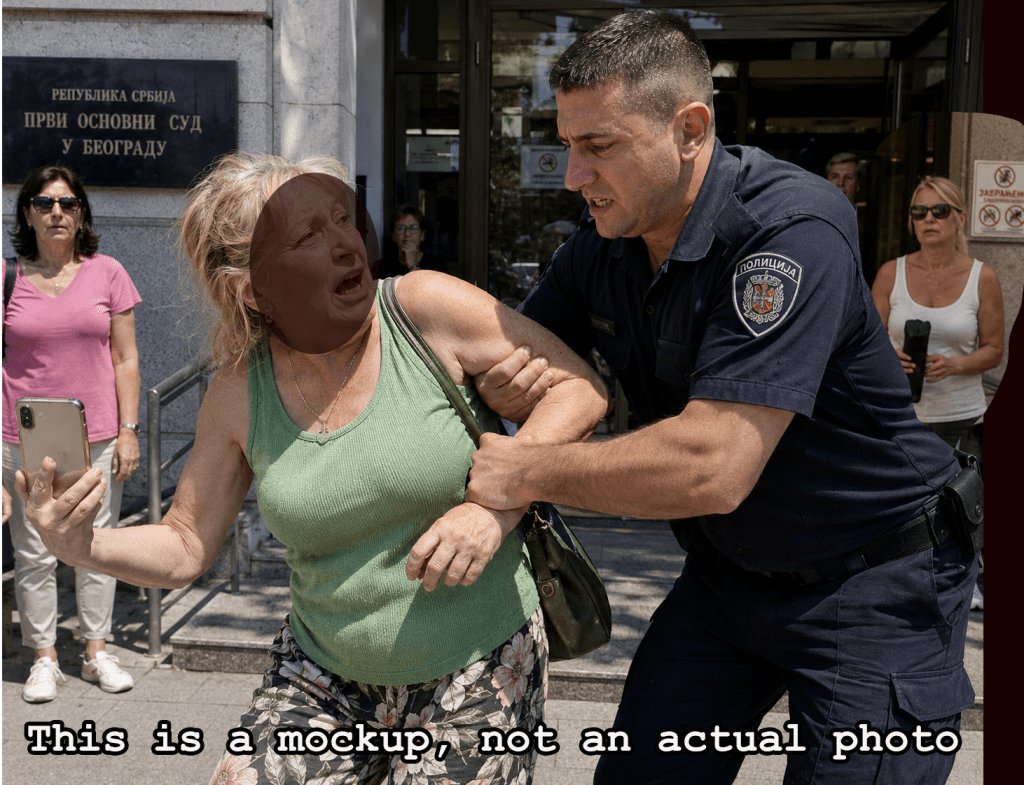
A woman does not dissolve into hysterics because a police officer politely asks her to change her blouse.
July 27, 2026
Monday began as an ordinary day.
My wife Olivera drove to the First Basic Court in New Belgrade to submit some routine legal papers.
It ended with her sobbing uncontrollably, declaring she would sell everything she owned in Serbia and never return.
I have never heard her like that.
The phone rang.
“Oli,” the screen said.
Instead of hearing her usual cheerful voice, I heard someone crying hysterically.
Not just crying.
Sobbing.
Blubbering.
Wailing.
Choking on her own breath.
She kept shouting only one word:
“Đubreta! Đubreta!”
Scum!
She was obviously yelling at someone, but I had no idea who.
“Breathe!” I kept telling her. “Just breathe! You can tell me what happened when you settle down.”
It took several minutes before she could utter anything resembling a coherent sentence.
“He just grabbed me and dragged me out.”
“But where are you right now?”
I knew she had gone to the courthouse.
I assumed she was calling from there.
Then, before the line went dead, she screamed:
“I am so through with Serbia, with this rotten country. I will sell everything and never come back. Screw Saška and everyone else who chooses to live in this shithole.”
The connection was lost.
I jumped into my car.
While driving toward New Belgrade, I was trying to piece together whatever had happened from those fragments of a broken telephone conversation.
I was furious.
Ready to break the kneecaps of whoever had done that to my wife with the little baseball bat I always keep in my car.
Then the sane part of me intervened.
“And what good would you be to your wife if you ended up rotting in jail?”
So I calmed myself down and kept driving.
Halfway there, just as I was entering downtown Belgrade, Oli called again.
She sounded calmer.
“I am just about to enter my car and drive to Pariska,” she said.
She had another appointment there to deal with yet another plumbing problem in my stepdaughter Saška’s apartment.
I told her where I was.
“Why don’t you come to Pariska too?”
I agreed.
By the time I got there, she had regained her composure.
I hugged her.
“Don’t talk about it now,” I said. “You can tell me everything when we get back home.”
Only after we returned did I learn what had happened.
According to Oli, she approached the courthouse entrance as she had done many times before.
A policeman stopped her.
“You’re wearing straps.”
“What?”
“I have this nice blouse. What’s wrong with it?”
“Your back is bare.”
Just then another woman, dressed even more casually, walked out of the courthouse.
“Did they let you in?” Oli asked.
“Yes,” the woman replied. “Why?”
At that point, according to Oli, the policeman grabbed her by both arms and began dragging her away from the courthouse entrance.
She screamed.
“Help me!”
Nobody moved.
Nobody said a word.
The policeman then threatened to arrest her.
“Why?” Oli demanded.
“What have I done?”
Then she uttered words that have stayed with me ever since.
“This is MY country. This is MY court. You are supposed to PROTECT me, not assault me.”
She took out her phone and photographed him. His badge read S. Dragojev.
That made him even angrier.
He threatened to arrest her for taking his picture.
“Fine,” she answered.
“Arrest me. We’ll see what’s going to happen to you if you do.”
He backed off.
By then, two more policemen had joined the confrontation.
One of them, more composed than the first, quietly asked her to leave before he had to arrest her.
She repeated to him exactly what she had told the first officer.
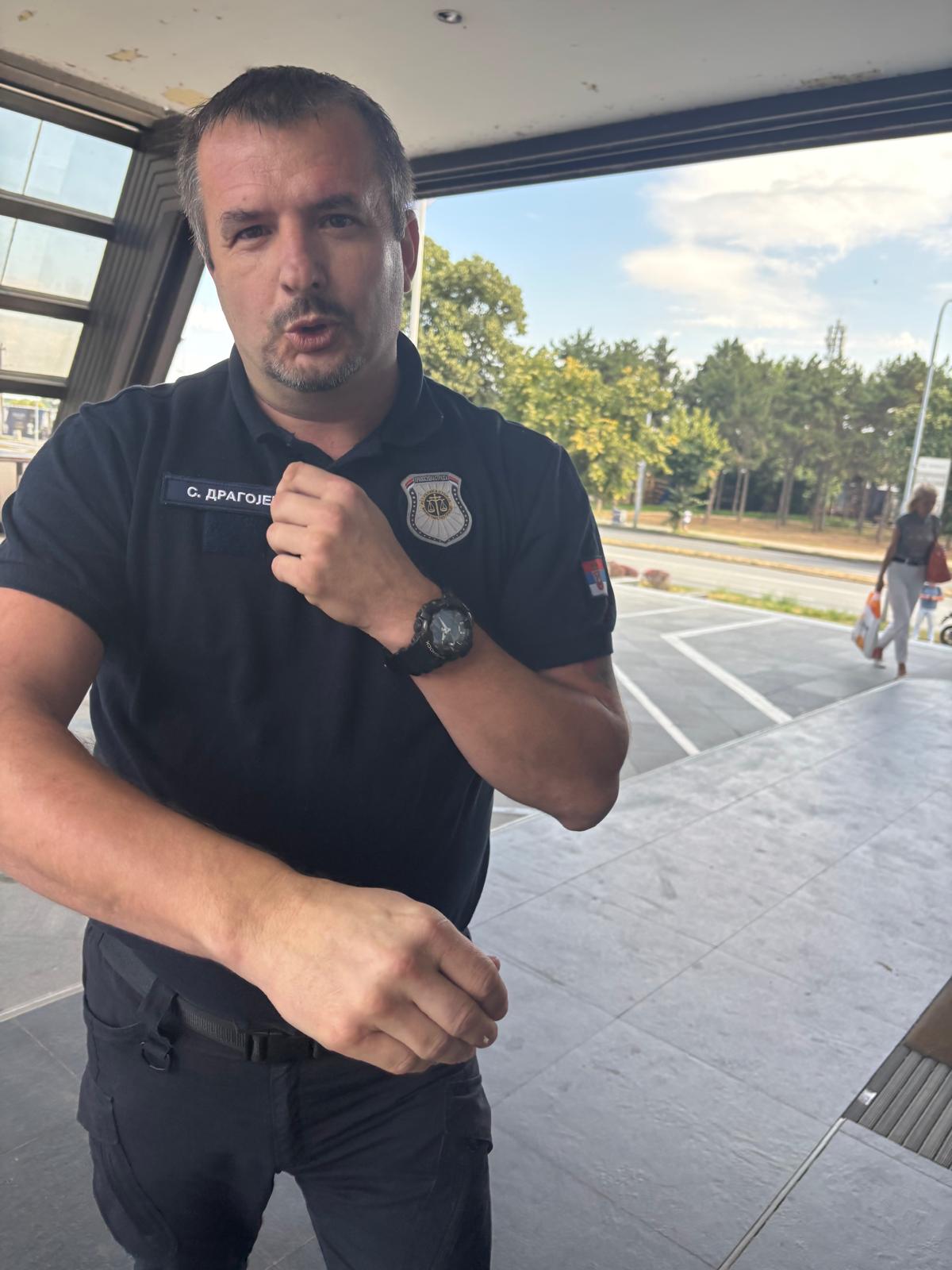
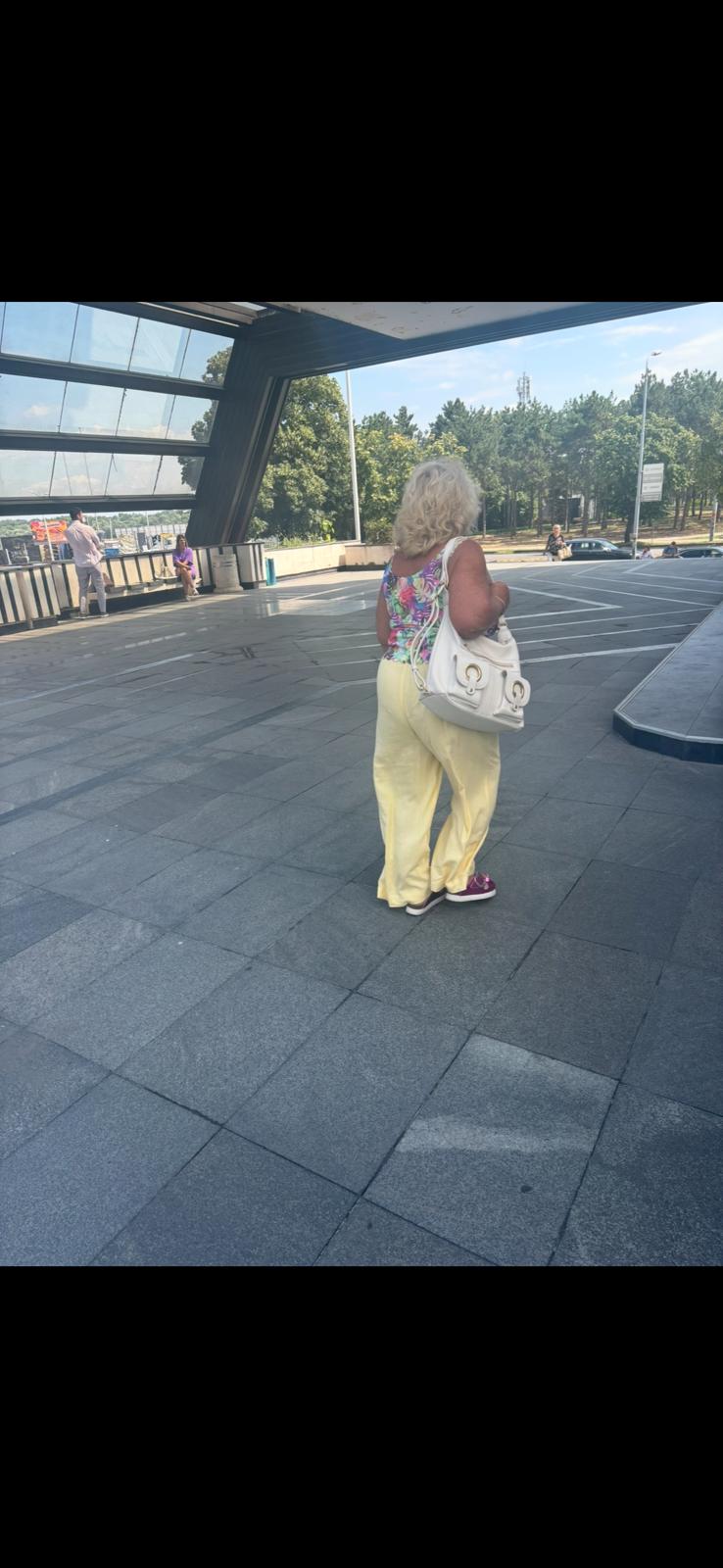
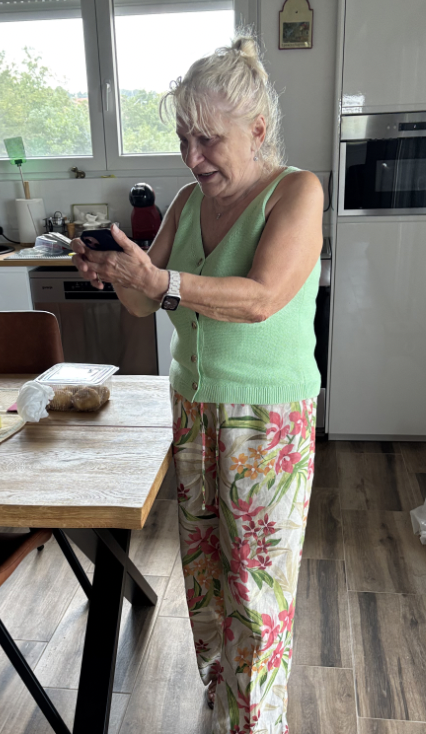
Eventually she left.
On the way out she photographed several other women whose clothing, in her opinion, exposed at least as much skin as hers.
One woman was standing there holding a pair of shoes.
She told Oli she too had been denied entry because the court considered her elegant summer slippers inappropriate.
Eventually Oli found a nearby market, bought another blouse, returned to the courthouse, passed through security without incident, and submitted the papers she had come to file in the first place.
When she got home, more than two hours had passed.
She had regained her composure.
Or so I thought.
The moment she began telling me the story, she broke down again.
“I have never been so humiliated in all my life.”
Then she said something I never expected to hear from her.
Until now, I had always been the one encouraging her to spend more time in America.
She loved Serbia.
Yesterday everything changed.
“I am going back. I will sell everything and never come to this rotten country again.”
Then she added something even more remarkable.
“I will learn English. I don’t care what it takes. I will do everything possible to feel at home in America.”
Some readers will undoubtedly argue about courthouse dress codes.
They are missing the point.
Every institution has the right to establish reasonable rules.
No institution has the right to humiliate its own citizens. You saw what happened to the head of ICE in America when they did that in Minnesota last winter.
No policeman has the right to grab and drag a 76-year-old woman because she questioned his arbitrary enforcement of those rules.
The issue is not fashion.
The issue is abuse of power.
I left communist Yugoslavia decades ago because I did want to tolerate this mentality. Both of the authorities and the citizens who cowed and allowed to be abused.
The uniform exists to serve the citizen.
Not the other way around.
Today my wife encountered the same arrogance I thought I had left behind.
She encountered it not in some dark alley.
But at the entrance to a courthouse—the very place where citizens are supposed to seek justice.
Suing the Police, Demand Action by American Government
We will now consult legal counsel regarding every available legal remedy.
We also intend to file a complaint with the United States Embassy in Belgrade, because the policeman did not merely assault my wife.
He assaulted an American citizen.
One thing is certain.
A woman does not dissolve into uncontrollable sobbing…
A woman does not declare she will abandon the country she has loved all her life…
A woman does not suddenly decide, at seventy-six, to learn a new language so she can leave forever…
…because a policeman politely asked her to change her blouse.
Something far more serious happened at the doors of the First Basic Court in Belgrade.
And that is exactly what we intend to find out.
And that’s also why I am publishing this article both in English and in Serbian. So that the Belgrade media have a chance to intervene on behalf of an assaulted citizen if the sheeple in front of the courthouse did not.
==========
Prevod sa engleskog:
Kako je jedan policajac danas napao moju suprugu u jednom beogradskom sudu
Žena ne pada u histeriju zato što joj policajac ljubazno kaže da promeni bluzu.
27. jul 2026.
Juče je počeo kao sasvim običan dan.
Moja supruga Olivera otišla je u Prvi osnovni sud u Novom Beogradu da preda neka rutinska dokumenta.
Završio se tako što je nekontrolisano jecala i plakala, govoreći da će prodati sve što ima u Srbiji i da se više nikada neće vratiti.
Nikada je nisam čuo takvu.
Zazvonio je telefon.
Na ekranu je pisalo:
„Oli.“
Umesto njenog uobičajenog vedrog glasa, čuo sam ženu kako histerično plače.
Ne samo plače.
Jeca.
Ridа.
Zapomaže.
Guši se u sopstvenom dahu.
Neprestano je ponavljala samo jednu reč:
„Đubreta! Đubreta!“
Bilo je očigledno da viče na nekoga, ali nisam imao predstavu na koga.
„Diši!“ ponavljao sam. „Samo diši! Ispričaćeš mi šta se dogodilo kada se malo smiriš.“
Prošlo je nekoliko minuta pre nego što je uspela da izgovori bilo šta nalik povezanoj rečenici.
„Zgrabio me je i izvukao napolje.“
„Ali gde si sada?“
Znao sam da je otišla u sud.
Pretpostavio sam da me zove odande.
A onda je, neposredno pre nego što se veza prekinula, povikala:
„Završila sam sa Srbijom, sa ovom trulom državom. Prodaću sve i nikada se više neću vratiti. Jebe mi se i za Sašku i za sve ostale koji odluče da žive u ovoj vukojebini.“
Veza se prekinula.
Skočio sam u kola.
Vozeći prema Novom Beogradu pokušavao sam da složim u glavi šta se dogodilo od tih nepovezanih delova prekinutog razgovora.
Bio sam besan.
Bio sam spreman da polomim kolena onome ko je to uradio mojoj ženi onom malom bejzbol palicom koju uvek držim u automobilu.
A onda se oglasio onaj razumniji deo mene.
„I kakve će ona imati koristi od toga ako ti završiš u zatvoru?“
Smirio sam se.
I nastavio da vozim.
Negde na pola puta, upravo kada sam ulazio u centar Beograda, Oli me je ponovo pozvala.
Ovoga puta zvučala je mnogo smirenije.
„Upravo sedam u kola i idem u Parisku“, rekla je.
Imala je još jedan dogovor zbog još jednog problema sa vodovodom u stanu moje pastorke Saške.
Rekao sam joj gde se nalazim.
„Dođi i ti u Parisku.“
Pristao sam.
Kada sam stigao, već se bila pribrala.
Zagrlio sam je.
„Nemoj sada da pričaš o tome“, rekao sam. „Ispričaćeš mi sve kada dođemo kući.“
Tek tada sam saznao šta se dogodilo.
Prema Oliverinoj priči, prišla je ulazu u sud kao i mnogo puta ranije.
Zaustavio ju je policajac.
„Imate bretele.“
„Molim?“
„Imam lepu bluzu. Šta joj fali?“
„Leđa su vam gola.“
U tom trenutku iz zgrade je izašla druga žena, obučena još ležernije.
„Jesu li vas pustili unutra?“ upitala ju je Oli.
„Jesu.“
„Pa zašto?“
U tom trenutku, prema Oliverinoj priči, policajac ju je zgrabio za obe ruke i počeo da je vuče od ulaza u sud.
Povikala je:
„Upomoć!“
Niko se nije pomerio.
Niko nije rekao ni reč.
Policajac joj je zatim zapretio hapšenjem.
„Zašto?“ upitala je Oli.
„Šta sam uradila?“
A onda je izgovorila rečenicu koja mi od tada ne izlazi iz glave.
„Ovo je MOJA zemlja. Ovo je MOJ sud. Vi treba da ME ŠTITITE, a ne da me napadate.“
Izvadila je telefon i fotografisala ga.
Na pločici je pisalo:
S. Dragojev.
To ga je još više razbesnelo.
Zapretio joj je da će je uhapsiti zato što ga je fotografisala.
„U redu“, odgovorila je.
„Uhapsite me. Pa ćemo da vidimo šta će se dogoditi vama ako to uradite.“
Povukao se.
U međuvremenu su stigla još dvojica policajaca.
Jedan od njih, mnogo smireniji od prvog, tiho ju je zamolio da ode pre nego što bude morao da je uhapsi.
Ponovila mu je isto ono što je rekla i prvom policajcu.
Na kraju je otišla.
Usput je fotografisala nekoliko žena čija je odeća, po njenom mišljenju, otkrivala najmanje isto toliko kože koliko i njena.
Jedna žena stajala je sa cipelama u rukama.
Rekla je Oliveri da ni nju nisu pustili unutra zato što su procenili da njene elegantne letnje papuče nisu odgovarajuće.
Na kraju je Oli pronašla obližnju prodavnicu, kupila drugu bluzu, vratila se u sud, prošla obezbeđenje bez ikakvog problema i predala dokumenta zbog kojih je i došla.
Kada se vratila kući, prošlo je više od dva sata.
Delovalo je da se smirila.
Ili sam barem tako mislio.
Čim je počela da mi priča šta se dogodilo, ponovo se slomila.
„Nikada u životu nisam bila toliko ponižena.“
A onda je izgovorila nešto što nikada nisam očekivao da ću čuti od nje.
Do juče sam ja bio taj koji ju je nagovarao da više vremena provodimo u Americi.
Volela je Srbiju.
Juče se sve promenilo.
„Vraćam se. Prodaću sve i više nikada neću doći u ovu trulu zemlju.“
A zatim je dodala nešto još značajnije.
„Naučiću engleski. Ne zanima me koliko će mi vremena trebati. Uradiću sve što mogu da se osećam kao kod kuće u Americi.“
Neki će sada sigurno raspravljati o pravilima oblačenja u sudu.
Promašili su suštinu.
Svaka institucija ima pravo da propiše razumna pravila.
Nijedna institucija nema pravo da ponižava svoje građane. Videli ste šta se prošle zime dogodilo šefu ICE-a u Americi kada su to pokušali u Minesoti.
Nijedan policajac nema pravo da zgrabi i vuče sedamdesetšestogodišnju ženu zato što je dovela u pitanje njegovo proizvoljno tumačenje tih pravila.
Ovde nije reč o modi.
Ovde je reč o zloupotrebi vlasti.
Napustio sam komunističku Jugoslaviju pre više decenija zato što više nisam želeo da trpim upravo takav mentalitet. Mentalitet vlasti, ali i građana koji ćute, saginju glavu i dopuštaju da budu zlostavljani.
Uniforma postoji da služi građaninu.
Ne obrnuto.
Juče je moja supruga ponovo naišla na istu onu bahatost za koju sam mislio da sam je ostavio iza sebe.
Ne u nekoj mračnoj ulici.
Već na ulazu u sud – upravo na mestu gde bi građani trebalo da traže pravdu.
Tužba protiv policije, zahtev za reakciju američke vlade
Sada ćemo se konsultovati sa advokatom o svim pravnim mogućnostima koje nam stoje na raspolaganju.
Takođe ćemo podneti predstavku Ambasadi Sjedinjenih Američkih Država u Beogradu, jer taj policajac nije napao samo moju suprugu.
Napao je američku državljanku.
Jedno je sigurno.
Žena ne pada u nekontrolisani plač…
Žena ne odlučuje da zauvek napusti zemlju koju je volela celog života…
Žena ne odlučuje u sedamdeset šestoj godini da nauči novi jezik kako bi zauvek otišla…
…zato što joj je policajac ljubazno rekao da promeni bluzu.
Na vratima Prvog osnovnog suda u Beogradu dogodilo se nešto mnogo ozbiljnije.
I upravo to nameravamo da utvrdimo.
Zato ovaj tekst objavljujem istovremeno na engleskom i na srpskom jeziku.
Da i beogradski mediji dobiju priliku da stanu u odbranu napadnute građanke, kada to već nisu učinili poslušnici koji su nemo posmatrali šta se događalo ispred samog suda.


Leave a comment