

When Systems Outgrow the People They Serve
March 28, 2026
It never starts with a collapse.
It starts with a smell.
Not a metaphor. A real one.
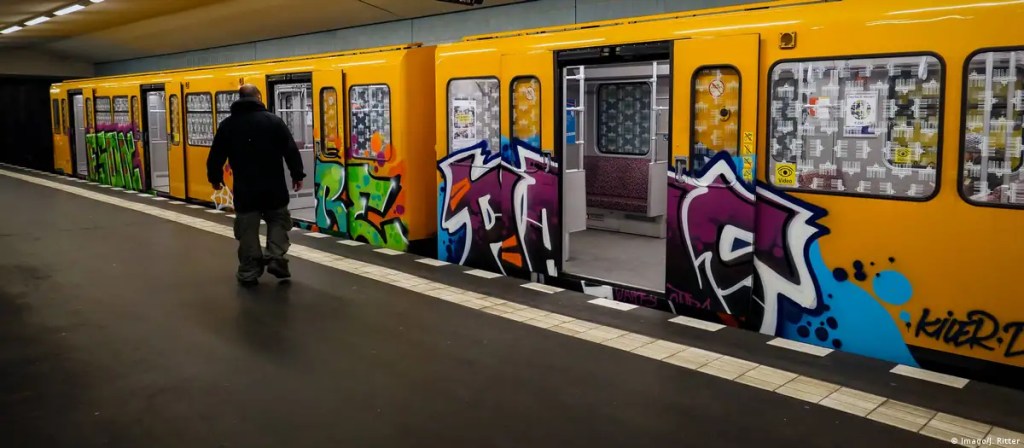
On a recent trip from Vienna to Berlin, my daughter—a seasoned global traveler who has lived and worked in Washington, DC, New York City, Moscow, London, and now Vienna—noticed something she did not expect to find in the capital of Europe’s largest economy.
The S-Bahn smelled like urine. Twice.
That, by itself, is not a geopolitical event. Cities have bad days. Infrastructure ages. Trains get dirty. Think New York City, Chicago…
But what struck her was not the incident. It was the impression.
Berlin did not feel like the capital of an economic powerhouse. It felt like a system that had lost its edge—slightly tired, slightly unsafe, and oddly out of sync with the world around it.
She was not angry. She was surprised.
And that surprise is the story.
A City as a Symptom
We are trained to look at nations through statistics—GDP, exports, industrial output. By those measures, Germany remains Europe’s anchor.
But systems do not fail first in spreadsheets.
They fail in signals.
A train that smells.
A station that feels unsafe.
A public space that no longer reflects pride, but tolerance of decline.
These are not causes.
They are symptoms.
The Illusion of Eurotopia
For decades, Europe pursued a grand idea: integration, harmonization, consensus. A continent bound not by force, but by systems—economic, political, bureaucratic.
It was, in many ways, a noble experiment.
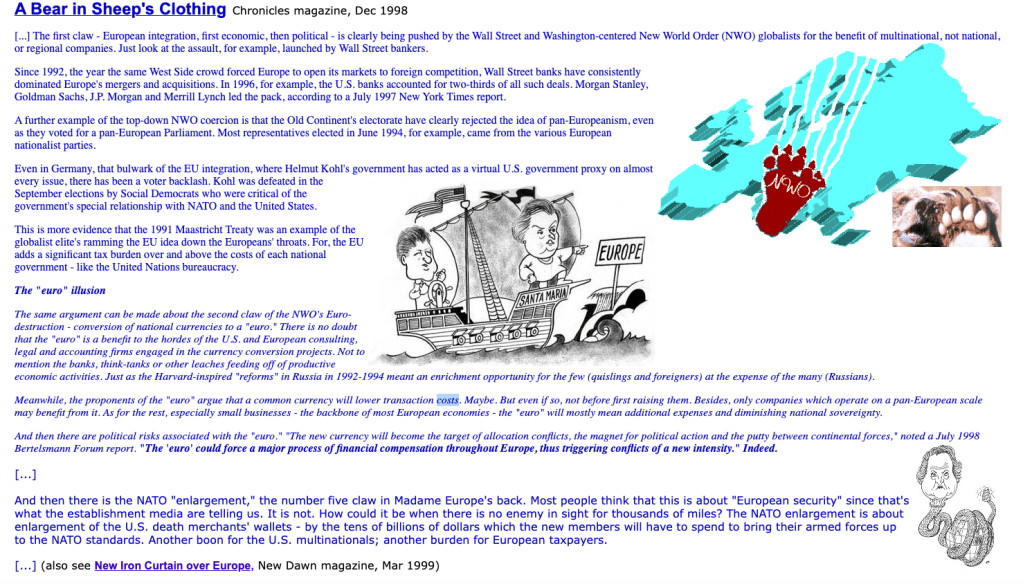
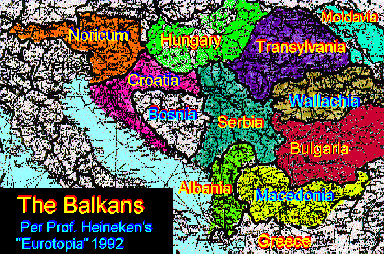
Call it Eurotopia. As I did almost three decades ago in a Chronicles magazine column (see below).
But every system carries within it a paradox:
The larger it grows, the farther it drifts from the people it was meant to serve.
Decisions become layered.
Accountability becomes diluted.
Compromise becomes policy.
And over time, compromise becomes culture.
I Have Seen This Movie Before
I have seen this pattern before—first in corporate America, inside giants like IBM—where systems grew so large, so optimized, so internally consistent, that they could no longer respond to the very customers they existed to serve.
From the outside, everything looked strong.
From the inside, the decay had already begun.
By the time the world noticed, it was too late.
Germany: From Engine to Indicator
Germany was never just another European country. It was the continent’s industrial engine—the benchmark of precision, discipline, and execution.
Its automobiles were not merely products; they were symbols. Engineering distilled into identity.
But even the strongest engines can lose timing.
Today, German industry finds itself squeezed between forces it once mastered:
- Energy policies that raised costs while reducing reliability
- Regulatory layers that slowed decision-making
- Global competitors—especially in Asia—moving faster, cheaper, and increasingly better
- Business and government decisions being made by “political correctness”, such as Diversity, Equity, and Inclusion (DEI), not merit.
- A political culture where forced compromise is no longer a tool, but an outcome
None of this produces immediate collapse.
It produces drift.
When Systems Outgrow Their Makers
What happens when a system becomes too large, too complex, too unwieldy, too distant from a customer?
It begins to optimize for itself.
Not for the people.
Not for the customer.
Not even for the original mission.
But for its own continuity.
That is when quality slips—not dramatically, but incrementally.
That is when accountability blurs.
That is when the distance between decision and consequence becomes invisible.
And that is when even icons begin to falter.
Case in Point: Gold-Plated Saddles
Here’s a case in point. A real-life story—from Germany.
The place was Mannheim, headquarters of BASF, a global industrial giant founded in 1865.
In the mid-1980s, as BASF explored diversification into the computer industry, they invited me to speak to their senior management about global IT trends.
After the lecture came dinner in the company’s vast executive dining hall—followed, as often happens, by “war stories.”
One of them stayed with me.
For decades, BASF had been known, among other things, for producing exquisite gold-plated leather designs—ornamental fittings for royal carriages, saddles, and fine furniture. It was a craft of another era.
But with the rise of steel, glass, and plastic automobiles, demand for such finery had long since disappeared.
And yet, even into the 1950s, a department dedicated to this craft still existed.
Why?
Because the company’s leadership could not quite bring themselves to close it.
So the craftsmen found a way to keep it alive.
They issued purchase orders… to themselves.
And then fulfilled them.
A closed loop.
A system that served itself.
A German version of a business perpetuum mobile.
It went on for years—quietly, almost invisibly—until reality finally intervened and the ax fell.

From Berlin to the Showroom
Which brings us, perhaps unexpectedly, to a car.
In a recent personal experience—what I called an “unwitting purchase”—I found myself dealing with one of Germany’s flagship brands, Audi.
What should have been a straightforward transaction became something else: a sequence of small disconnects, inconsistencies, and lapses that, taken individually, meant little.
Taken together, they told a story.
Not of failure.
But of erosion.
The kind that does not show up in quarterly reports.
The kind you feel before you can prove.
Audi is not alone. It is simply visible.
Because when systems begin to drift, even their finest expressions begin to reflect it.
When the Center Cannot Feel
Germany today is not collapsing.
But it is signaling.
What my daughter saw in Berlin was not about cleanliness, or policing, or even policy.
It was something more subtle—and more consequential:
A system that no longer feels the people it governs.
And when that happens, decline does not arrive with a bang.
It arrives quietly. Gradually.
Until one day, what was once unthinkable becomes obvious.
The trickle becomes a crack…
the crack becomes a collapse.
And when that happens, you don’t want to be standing on the dam.
TiM’s Final Word
Borrowing from the German philosopher Arthur Schopenhauer:
“All truth passes through three stages. First, it is ridiculed; second it is violently opposed; and third, it is accepted as self-evident.”
Germany, it seems, may be approaching the third stage.
An excerpt from my 1998 article: A Bear in Sheep’s Clothing

 Truth in Media
Leave a comment