Paperless Office: Still Mostly an Elusive Goal
March 30, 2026
“It Is English“
In 1985, I visited Japan.
I conducted a seminar for Fujitsu, one of IBM’s most formidable competitors at the time. While there, I also took the opportunity to visit Hitachi—another major player in the global computing arena.
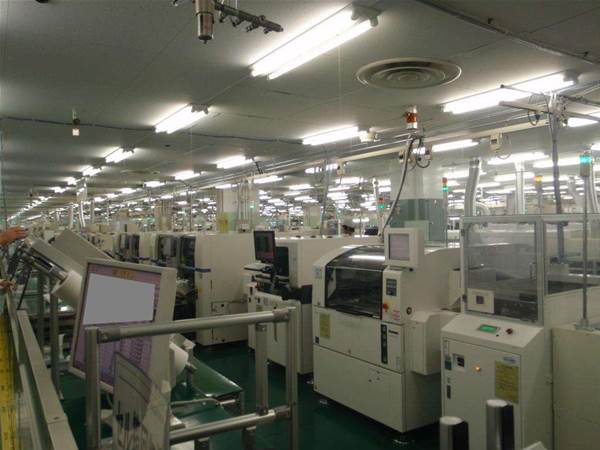
The meeting was set at Hitachi’s storage plant in Odawara, south of Tokyo. They took me on a tour of their factory, proudly displaying their advanced storage devices.
Afterward, about a dozen Hitachi executives and I gathered around a long boardroom table. We discussed what we had seen on the factory floor.
At one point, I said:
“I am really impressed by your hardware technology. But nowadays, and even more in the future, software will be king. Why is it that you are lagging behind your American competitors in that area?”
There was dead silence around the table.
The executives exchanged nervous glances. Then they broke into animated discussion in Japanese. I waited patiently.
Finally, the chief engineer spoke.
“It is English.”
“English?” I repeated. “What do you mean?”
“Most of software is based on English words. We are not so good at it. Yet. But we are good engineers. We understand machine language.”
It was a revealing moment.
Not a lack of intelligence. Not a lack of engineering skill. But a gap—linguistic, cultural, conceptual.
Of course, that advantage did not last long. The Japanese, like others around the world, quickly learned to compete in the software field.
But the lesson stayed with me.
Toward Paperless Office
When I returned from that trip, I told my team that I had an idea—one that could change the way we worked.
I had seen how good Hitachi’s OCR readers were.
“What if we scanned everything we have and put it on a disk?” I asked. “Then we wouldn’t need paper, would we? And we could search documents much faster than going to a library, using microfiche, or relying on our own eyes.”
It seemed obvious.
In hindsight, it was.
A 50-Year March
But reality moves at its own pace. The paperless office was first mentioned in 1975 (though unbeknownst to me until just now, when I researched it).
So it’s been a 50-year march. And we are still not there. Not by a long shot.
The paperless office did not begin to emerge until the 21st century. And even now, it remains more aspiration than norm.
In many parts of the world, it is still a distant dream.
Five years ago, I visited a court in Belgrade.
This was its filing system.
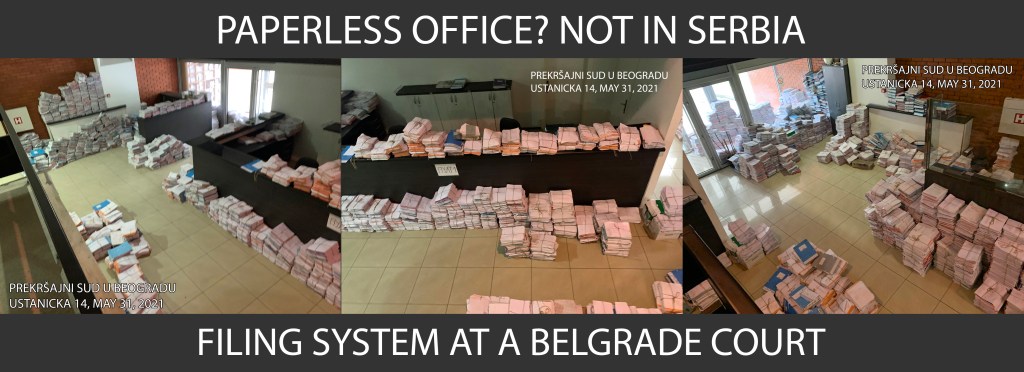
Some systems evolve.
Others just accumulate paper.
They resist change not because they do not see it.
They resist it because it’s hard work.
 Truth in Media
Leave a comment