
AI can generate images. It still cannot generate meaning.
One hundred years ago, audiences marveled at the arrival of “talkies,” as silent films gave way to sound. Fifteen years ago, Hollywood rediscovered silence, rewarding a pseudo-silent film with multiple Oscars. Progress, it seems, is rarely linear.
In the 1980s, a data center manager in Victoria, British Columbia, offered a more durable definition of innovation:
“We are not on the leading edge of technology. We are on the bleeding edge.”
Four decades later, I found myself there again — this time in the middle of the current AI frenzy.
Not as a convert. As an examiner.
I wanted to see how much of the current excitement around artificial intelligence reflects genuine progress — and how much of it is, once again, hype wrapped in novelty.
The Experiment
I supplied an AI video generator with a simple prompt. Not code. Not instructions. A scene:
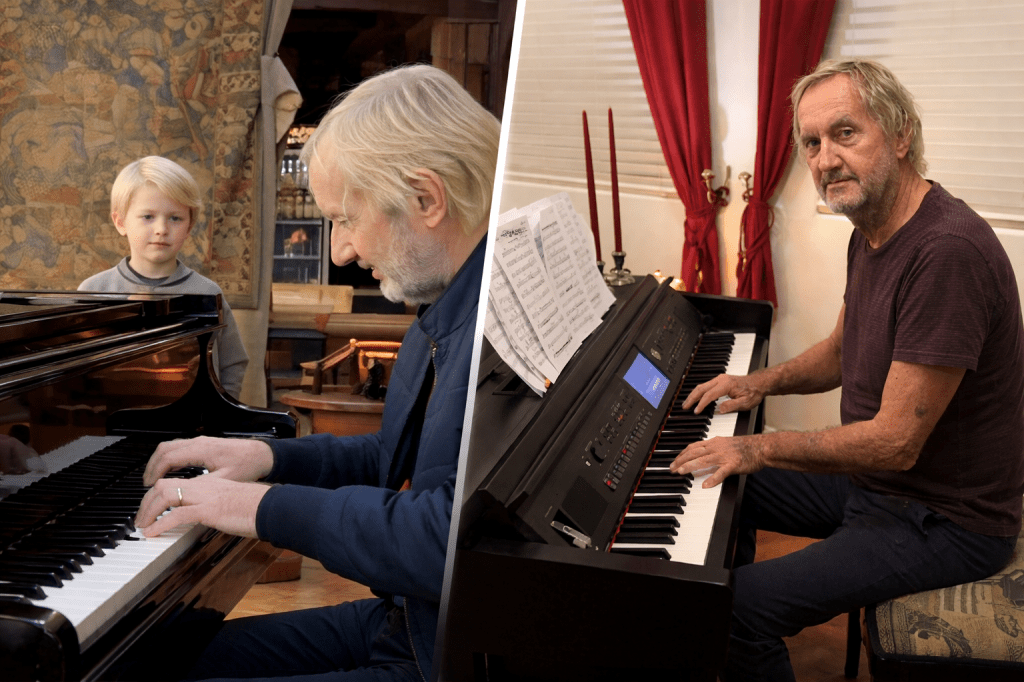
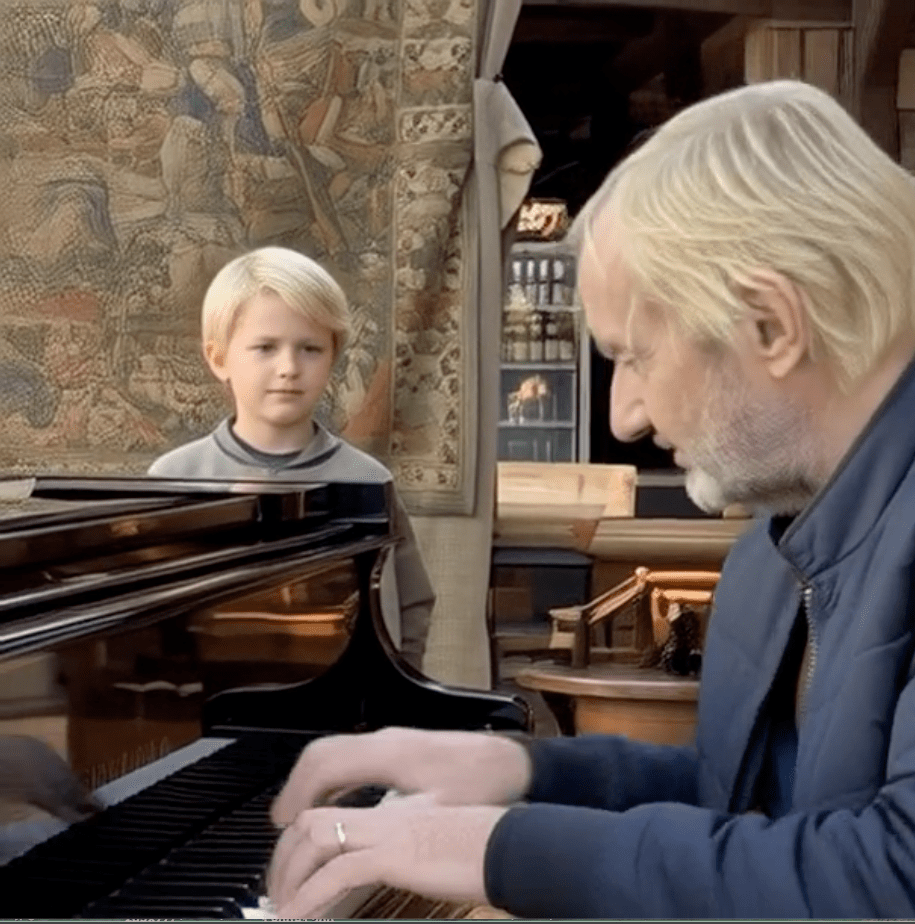
An older pianist… ghostly figures of Mozart, Beethoven, the Beatles… a young boy listening in silence and awe.
In other words, not a technical exercise. A poetic one.
The system responded as modern systems do — slowly, opaquely, and with the familiar illusion of intelligence masking a great deal of mechanical trial and error. After several attempts and a growing sense of déjà vu, I left it alone.
When I returned, it had produced a five-second clip.
Silent.
Visually impressive. Surprisingly so. The likeness was credible. Details were inferred that had not been explicitly provided. The machine had done what machines increasingly do well — it approximated form.
The Missing Piece
But it could not complete the task.
There was no sound. No voice. No meaning.
Which, as it turned out, was the point.
Because what followed was not an AI process, but a human one. I added the missing elements using tools that, by today’s standards, are almost antiquated: GarageBand and iMovie. In less than half an hour, the silent clip became a short piece of narrative.
The key was not the software.
It was a single line:
“For the boy with no piano.”
That line did what the AI could not. It connected the image to memory, to experience, to a life lived before the technology existed.
Because if the AI could provide the moving image, I could provide what actually mattered: the music, the voice, the human intent.
The Lesson
This is where the current discourse about AI becomes unbalanced.
The machine can now generate images, motion, and even style with increasing sophistication. It can imitate. It can interpolate. It can approximate.
But it does not know what anything means.
It does not know who the boy is.
It does not know why the piano matters.
It does not know that sometimes the absence of an instrument precedes the presence of music.
That gap — between form and meaning — remains entirely human.
The Bleeding Edge, Revisited
The experiment confirmed two things.
First, there is real progress here. The visual capabilities are not trivial. They are advancing quickly and, in certain respects, impressively.
Second, the surrounding hype is as inflated as ever. We have seen this pattern before. New tools arrive, accompanied by claims that they will replace human judgment, creativity, or authorship. They never do.
They change the tools. They do not change the principle.
Technology can accelerate execution.
It cannot replace intention.
Conclusion
So, for now, my judgment is simple:
Thanks, but no thanks.
This particular branch of AI remains too rudimentary to justify the time required to coerce it into doing something meaningful. It can produce fragments. The user must still assemble the whole.
Which brings us back to that line from the 1980s.
We are, once again, on the bleeding edge.
Only now the machines are faster, prettier, and more persuasive.
They still require the same thing they always have:
A human being to tell them what matters.
How much has mankind really progressed in the last 100 years?
 Truth in Media
Leave a comment